

Azure Blob Storage
Use object storage for appropriate unstructured information such as application files and data extracts. Design containers, naming and access around the application rather than assuming object storage behaves like a shared drive.
 MICROSOFT AZURE & DATA
Give files, application objects and analytical data a storage design suited to how they are used. Tripearltech helps you select Azure Storage services, move information safely and establish the access, retention and recovery practices your business needs.
 View image at full size ↗
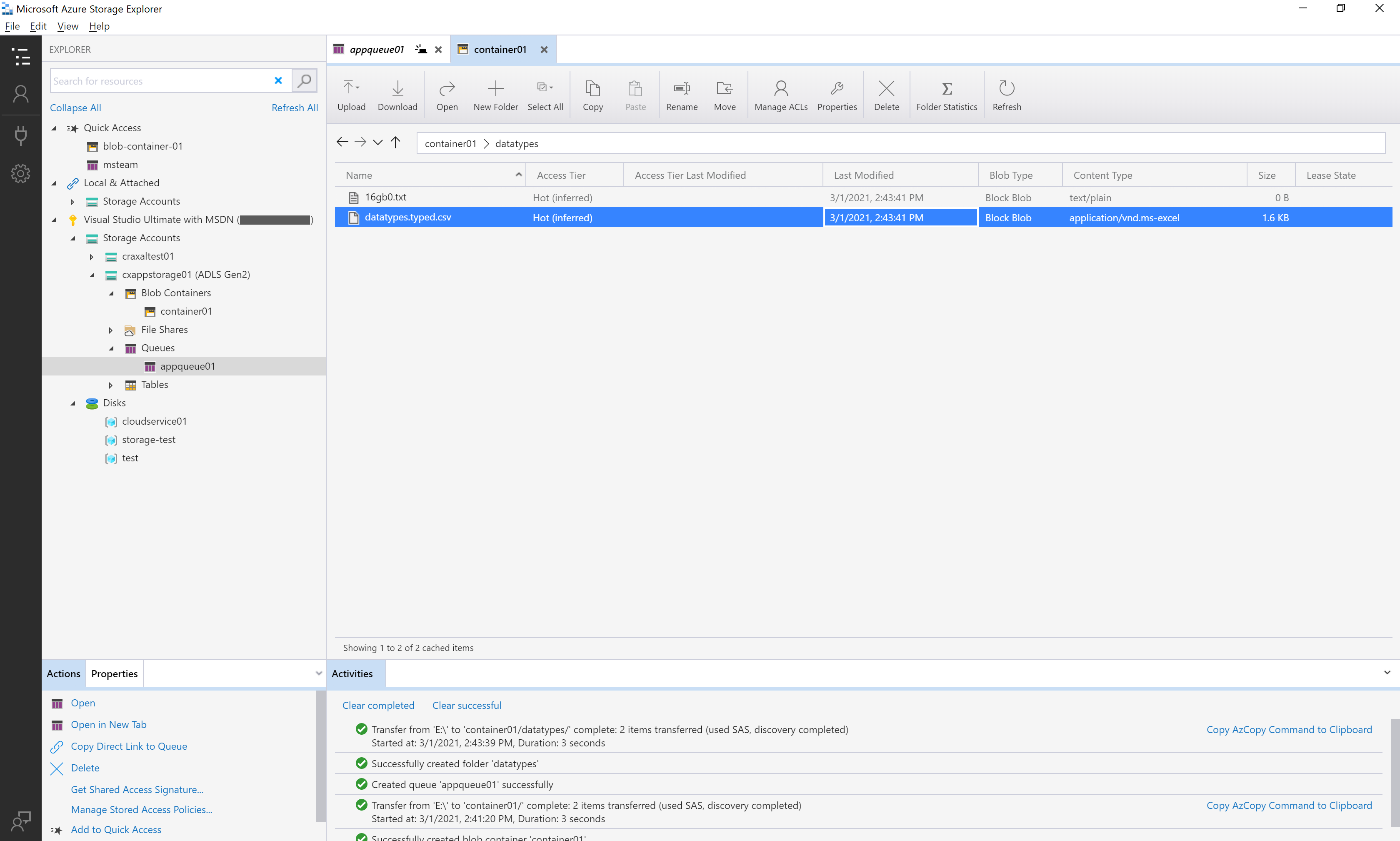
Microsoft Azure Storage Explorer interface Shown capabilities depend on licensing and configuration.
Different businesses. Different ways of working. A shared need for technology that supports real operations.









Capacity is only one part of a storage decision. Access frequency, file protocols, application behavior, recovery needs and transfer cost also matter. We help you turn those requirements into a manageable Azure storage design.
Use object storage for appropriate unstructured information such as application files and data extracts. Design containers, naming and access around the application rather than assuming object storage behaves like a shared drive.
Assess managed file shares for supported SMB or NFS requirements. Check identity, file characteristics and application compatibility, and test the experience from the locations that will use the share.
Consider hierarchical namespace and analytical access requirements for a data lake. Agree the structure, permissions and ownership of raw and prepared information before loading large volumes.
Select suitable persistent disks for virtual-machine workloads. Assess throughput and latency as well as capacity, and keep disk protection within the wider virtual-machine recovery design.
Assess storage queues for simple message handling and table storage for suitable key-based data. These services have different semantics from file storage, relational databases and enterprise messaging platforms.
Match supported storage tiers and lifecycle rules to actual use. Include retrieval delay, transaction charges and minimum retention behavior when considering colder or archive storage.
Compare locally, zone- and geographically redundant options supported by the account and region. Redundancy addresses infrastructure failures; it is not a complete answer to accidental deletion or an incorrect application write.
Define who or what can read, write and administer information. Review identities, scoped access, network controls and key handling so convenience does not become uncontrolled sharing.
Assess versioning, soft deletion, immutability or backup where supported and appropriate. Plan how information will move, be verified and be recovered, including egress and repeated access costs.
Blob objects, file shares and virtual-machine disks are not interchangeable. Features, protocols, redundancy, performance and lifecycle behavior depend on service and account choices. Confirm the intended access pattern and recovery requirement before selecting a storage tier.
Microsoft reference ↗Connect Azure Storage to the applications your people rely on. Define the business handoff, data ownership and permissions before adding another integration.

Host the applications and identities that use storage. Coordinate network and application changes with any storage transition.
Explore solution ↗
Connect analytical information through supported paths such as ingestion or shortcuts. Review source permissions and the effect of changing or deleting source files.
Explore solution ↗
Keep transactional records in a suitable database and use storage for appropriate supporting objects or exchanges. Define the relationship between records and files.
Explore solution ↗
Observe relevant capacity, requests and failures. Alert on conditions that affect the application and assign a response owner.

Consume prepared information through a supported reporting architecture. Raw files still need business definitions, quality checks and refresh planning.
Explore solution ↗
Coordinate storage dependencies within a wider workload migration. File transfers and database moves may require additional service-specific tooling.
Explore solution ↗We separate primary storage, redundancy, backup and archive decisions. A clear information lifecycle makes it easier to explain who can use data, how long it remains available and how it is recovered.
Read the Microsoft reference ↗Tripearltech provides Azure Storage consulting, implementation and support from Ahmedabad, India, for businesses worldwide. Each engagement starts with your operating needs and a clear division of responsibility.
Inventory file types, volumes, growth, protocols and application dependencies. Identify which information belongs in object storage, shares, disks or another service.
Plan resource structure and access boundaries. Test administrator and application permissions, including what an identity should not be able to read or change.
Select a suitable transfer method and validate it with samples. Check names, metadata, access and application references as well as transferred bytes.
Review access frequency and retention needs before introducing tiering or deletion rules. Model retrieval and transaction costs alongside stored capacity.
Configure agreed safeguards and rehearse recovery. Document the difference between restoring an item and restoring the complete business process that depends on it.
Agree capacity reviews, access checks, lifecycle changes and incident handling. Maintain ownership as applications and data volumes grow.
The value of Azure Storage depends on the process it improves. Explore common industry needs and the implementation decisions that help the solution fit.
Inspection records and production files grow without consistent ownership or retention.
Classify information by use and retention need, then select suitable storage and protection. Ensure production applications can still find and retrieve the correct records.
Large design files and specialist applications depend on file behavior and network speed.
Test protocols, latency and file operations with the actual applications. Avoid moving to an object interface when the workflow requires a conventional file share.
Document exchanges and attachments are scattered across integration folders.
Define a controlled exchange structure with permissions, validation and cleanup rules. Keep important business records linked to the relevant operational transaction.
Application media and exports grow while access patterns vary.
Use a suitable object and lifecycle design, with controlled application access. Test retrieval requirements before placing information into a colder tier.
Client files need clear access boundaries and end-of-project handling.
Separate access and ownership by the agreed engagement model. Plan retention, return or deletion with responsible business owners and verify the process.
Raw extracts accumulate without a clear path to trusted reporting.
Define landing, preparation and consumption conventions. Track source ownership and quality so storage growth produces usable information rather than an unsearchable file collection.
Explore the Microsoft credential references relevant to this solution and its supporting implementation disciplines.
Azure administration and architecture disciplines support access, service selection and resilience. Storage decisions also need practical understanding of the applications and information lifecycle involved.
Discuss your project team ↗ Exam AZ-104
Azure operations and governance
View official credential ↗ Exam AZ-305
Expert credential · Azure Administrator Associate prerequisite
View official credential ↗Official Microsoft credential references, checked September 2026. These badges identify certification disciplines, not individual employee records. Related and retired credentials are labeled. Ask us about the verified credentials and practical experience of the specialists proposed for your engagement.
Bring clarity to file types, access patterns, protection and cost before moving business information into Azure Storage.
Bring the right people and questions to your first implementation workshop.
Our Azure Storage delivery approach makes design decisions, acceptance and readiness visible. The people who own the process stay involved from discovery through support.
Understand information types and the applications that use them.
An owned storage and access inventory.Select services, protection and lifecycle settings.
Accepted access and recovery decisions.Test transfer and real application use with representative files.
Verified compatibility and retrieval behavior.Transfer in agreed waves and validate information and access.
Accepted records and application connections.Review growth, cost, protection and lifecycle changes.
Named owners and recurring checks.Understand the solution, its boundaries and how Tripearltech can support your implementation.
Let’s talk about your business ↗Blob Storage exposes objects through object-oriented interfaces. Azure Files provides managed file shares with supported file protocols. Choose according to application behavior, not just the price per stored unit.
It is a family of storage services. A complete backup approach also needs recovery points, retention, isolation where appropriate, monitoring and tested restores. Redundant storage alone is not a full backup policy.
It refers to capabilities suited to analytical data, including hierarchical organization in supported Blob Storage accounts. Useful analytics still needs ownership, quality, permissions and a processing design.
Possibly, if retrieval timing, charges and retention behavior fit. Test the business need to retrieve information before moving it to a tier designed for infrequent access.
Not by itself. Redundancy and recovery safeguards address different situations. Assess features such as versioning, soft deletion or backup where supported and test the selected approach.
A suitable Azure Files or hybrid design may help, but assess identity, application compatibility, latency and file operations first. Not every file-server workload has the same requirements.
Use appropriately scoped identities and permissions, with suitable network controls. Document how credentials or access tokens are managed and test both authorized and unauthorized scenarios.
Transactions, retrieval, transfer, redundancy, performance and protection settings can affect cost. A design should reflect how information is used, not only how many terabytes it occupies.
Supported integration paths can make information available for analytics. Confirm formats, access, freshness and preparation; a connection alone does not create reconciled business reporting.
We can assess, design, migrate and help operate the storage environment. Scope includes the selected services, access, protection, monitoring and lifecycle responsibilities agreed for the engagement.
Azure Storage overview ↗ · Blob Storage ↗ · Azure Files ↗ · Storage redundancy ↗