
Environment onboarding
Establish what is running, who owns it and which services are in scope. Review access and documentation before accepting operational responsibility for an inherited environment.
 MICROSOFT AZURE & DATA
Keep your Azure environment supported as applications, people and demand change. Tripearltech’s Azure managed services bring agreed monitoring, administration, recovery checks and improvement reviews into a clear operating arrangement built around your business.
 View image at full size ↗
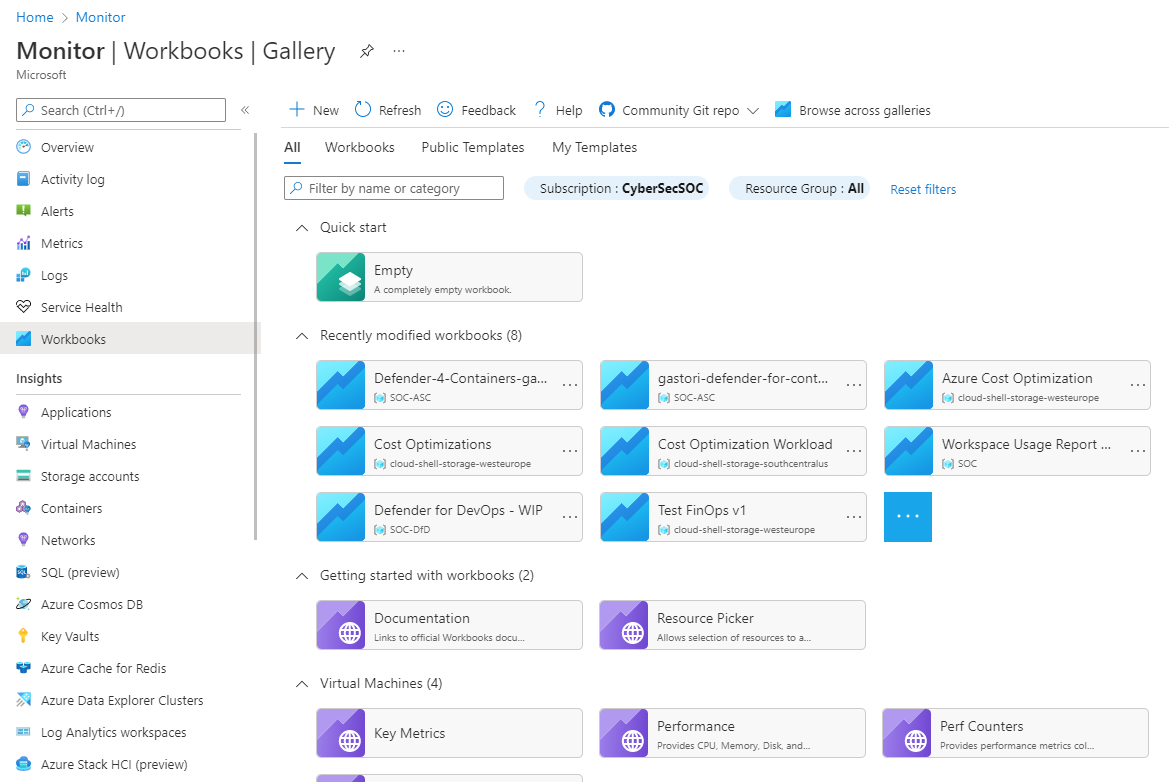
Azure Monitor Workbooks gallery Shown capabilities depend on licensing and configuration.
Different businesses. Different ways of working. A shared need for technology that supports real operations.









Azure Managed Services on this page means Tripearltech’s scoped support offering. It is not a separate Microsoft product or an automatic 24/7 commitment. Coverage, response targets, included systems and responsibilities are agreed for each engagement.
Establish what is running, who owns it and which services are in scope. Review access and documentation before accepting operational responsibility for an inherited environment.
Define useful signals and route them to the responsible team. Tune avoidable noise and distinguish an alert being collected from a person being committed to respond within a specified window.
Agree severity, communication and escalation according to business impact. Preserve investigation evidence and coordinate platform, application and third-party owners when the problem crosses service boundaries.
Plan approved configuration changes and applicable maintenance. Test meaningful changes, record dependencies and define recovery steps before altering production resources.
Review backup status and conduct agreed restore exercises. Confirm the application can use recovered information, and record any gap between the expected and demonstrated recovery outcome.
Periodically assess privileged roles, service identities and important settings. Escalate exceptions for approval instead of allowing temporary access to become an undocumented permanent arrangement.
Track consumption, growth and avoidable waste against the agreed baseline. Present recommendations with their operational trade-offs rather than making cost changes without business context.
Keep the resource inventory, runbooks and support contacts current. Report meaningful issues, completed work and decisions needed from the business in a format owners can use.
Review recurring incidents and aging configurations. Separate routine service work from larger projects, with clear approval for architecture changes or application redevelopment.
A managed-service agreement should define environments, hours, response targets, exclusions and escalation. Microsoft’s platform SLA, Microsoft support plans and Tripearltech’s service commitments are different arrangements. Application fixes, security operations and 24/7 coverage require explicit scope.
Microsoft reference ↗Connect Azure Managed Services to the applications your people rely on. Define the business handoff, data ownership and permissions before adding another integration.
Support metrics, logs, application observation and alerts where configured. The monitoring tool does not itself establish incident-response coverage.

The cloud resources covered by the agreement. Keep subscription ownership and the customer’s administrative control explicit.
Explore solution ↗
Include database administration only where agreed. Distinguish platform health from query, schema and application responsibilities.
Explore solution ↗
Review relevant capacity, access and recovery settings. Lifecycle and deletion changes need accountable approval.
Explore solution ↗
Assess assistance for reviewed investigations and administrative tasks. It does not replace the service team or its approval process.
Explore solution ↗
Present service or cost reporting where useful. Agree definitions, data sources and reporting access before building management views.
Explore solution ↗We make service boundaries visible: who monitors, who approves a change, who fixes application code and who contacts Microsoft. Clear ownership helps an incident move forward without assumptions about another team’s responsibilities.
Read the Microsoft reference ↗Tripearltech provides Azure Managed Services consulting, implementation and support from Ahmedabad, India, for businesses worldwide. Each engagement starts with your operating needs and a clear division of responsibility.
Review the environment and inherited risks. Create an inventory, agree scope and record work needed before steady-state support begins.
Carry out agreed routine tasks and approved changes. Maintain an audit trail and coordinate maintenance with application owners.
Configure or review alert routing and investigate covered incidents. Follow the agreed service window, severity and escalation process.
Check recovery arrangements and conduct scoped exercises. Present gaps and improvement options with the business impact explained.
Review trends and propose justified adjustments. Confirm performance, licensing and commitment implications before an approved change.
Report completed work, recurring issues and pending decisions. Keep runbooks current and support an orderly handover if responsibilities change.
The value of Azure Managed Services depends on the process it improves. Explore common industry needs and the implementation decisions that help the solution fit.
Cloud-hosted business systems lack a clear escalation path during operational issues.
Define application criticality, contacts and coverage around plant needs. Test the escalation and recovery process rather than relying on a generic support mailbox.
Failed integrations leave teams unsure whether to contact the cloud or application provider.
Map ownership across the transaction path and agree coordinated investigation. Include business-impact information in the incident record.
Internal IT has limited capacity for recurring cloud administration.
Agree a practical division of work and retained decision authority. Document routine tasks, exceptions and the route for requesting additional project work.
Seasonal demand changes resource use and support priorities.
Review capacity before known peaks and define escalation around trading impact. Keep optimization decisions aligned with the customer experience.
Developers are repeatedly interrupted by infrastructure issues and unclear alerts.
Separate application and platform signals, maintain useful runbooks and identify recurring causes. Preserve a clear handoff between development and operations.
Cloud spending and access expand without regular review.
Introduce named ownership and periodic reviews of consumption, privileged access and unused resources. Require approval for changes with business or contractual consequences.
Explore the Microsoft credential references relevant to this solution and its supporting implementation disciplines.
Cloud operations depend on administration, architecture and a reliable service process. We discuss the proposed team’s experience alongside the coverage, escalation and ownership arrangements in the service scope.
Discuss your project team ↗ Exam AZ-104
Azure operations and governance
View official credential ↗ Exam AZ-305
Expert credential · Azure Administrator Associate prerequisite
View official credential ↗Official Microsoft credential references, checked September 2026. These badges identify certification disciplines, not individual employee records. Related and retired credentials are labeled. Ask us about the verified credentials and practical experience of the specialists proposed for your engagement.
Use this guide to define what should be managed, when help is available and how operational responsibility is shared.
Bring the right people and questions to your first implementation workshop.
Our Azure Managed Services delivery approach makes design decisions, acceptance and readiness visible. The people who own the process stay involved from discovery through support.
Review the environment, risks and current support arrangements.
A clear service scope and remediation list.Establish access, monitoring, contacts and runbooks.
Accepted operational readiness.Perform covered tasks and coordinate incidents and changes.
Visible work records and accountable ownership.Assess service trends, consumption and recovery evidence.
Agreed actions and business decisions.Implement approved changes and update the operating documentation.
A maintained service and controlled backlog.Understand the solution, its boundaries and how Tripearltech can support your implementation.
Let’s talk about your business ↗They are agreed operational services for an Azure environment, such as administration, monitoring review, incident coordination and recovery checks. The contract defines exactly what is included.
Only if explicitly agreed. Service hours, response targets, severity rules and escalation arrangements are defined for the engagement and should not be inferred from the page title.
Microsoft support addresses its services under the selected support plan. Tripearltech can help operate and coordinate your environment under a separate scope; the two arrangements have different responsibilities.
Yes, subject to an onboarding assessment and agreed scope. We review access, inventory, documentation and outstanding risks before accepting the defined operational responsibilities.
Only the applications, databases and tasks listed in the agreement are included. Platform administration, query tuning and code changes are separate responsibilities unless specifically combined in scope.
Any commitment must be based on the agreed architecture, dependencies and service terms. Microsoft’s resource SLA is not automatically an end-to-end application guarantee.
The agreed change process identifies the authorized approver, permitted routine actions and emergency procedure. Business-impacting changes should not depend on an informal assumption of authority.
For covered services, we investigate and escalate according to the agreed process. Recovery readiness also requires periodic restore checks and application validation, not only a successful backup status.
We can review consumption and recommend suitable changes. Savings depend on the environment and approved trade-offs; we do not promise a fixed percentage before assessment.
Yes. A clear division of responsibilities often works well. We agree retained access, communication, approvals and knowledge transfer so your team remains informed and in control.