
Use-case assessment
Identify a repeated task and the decisions around it. We assess whether AI is appropriate, whether reliable inputs exist and whether a simpler application or rule would solve the problem better.
 MICROSOFT CLOUD & AI
Turn useful ideas into carefully scoped AI applications. Tripearltech helps businesses assess Microsoft AI technologies, connect approved knowledge and design assistance that fits a real process—with clear boundaries, human review and a plan for ongoing operation.
 View image at full size ↗
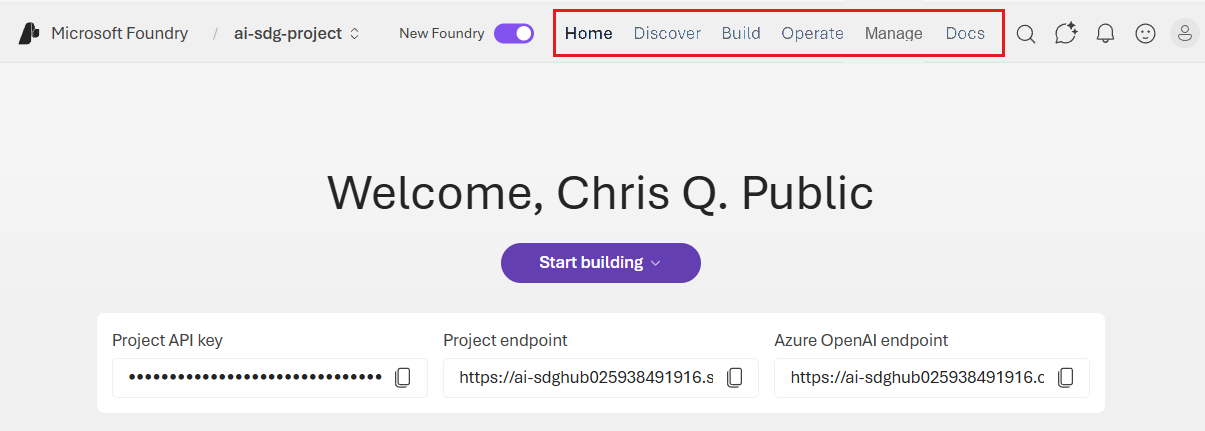
Microsoft Foundry portal home and navigation; official documentation screenshot includes a red annotation around navigation. Shown capabilities depend on licensing and configuration.
Different businesses. Different ways of working. A shared need for technology that supports real operations.









Microsoft AI is a portfolio, not a single subscription. A ready-to-use Copilot, a low-code agent and a custom application solve different problems. We help you select the simplest suitable approach and test its value against the task that matters.
Identify a repeated task and the decisions around it. We assess whether AI is appropriate, whether reliable inputs exist and whether a simpler application or rule would solve the problem better.
Consider Microsoft 365 Copilot when the need sits within everyday documents and collaboration. Keep workplace adoption separate from custom application engineering and its operating responsibilities.
Assess Copilot Studio for a defined conversational or task-oriented experience. Plan knowledge ownership, escalation and the actions the agent is allowed to request.
Use Microsoft Foundry where the requirement needs a custom model-based application. Design the user journey and service boundaries before choosing a model or connecting production systems.
Build a retrieval approach around owned documents and access requirements. Evaluate whether answers use the intended sources and make unsupported responses visible to the user.
Assess extraction or classification against your actual document samples. Include poor scans, unusual layouts and uncertain fields in the evaluation, with a route for human correction.
Connect approved business APIs only where the process requires an action. Apply scoped identities, validation and approval gates around financial, customer or operational changes.
Create test examples that reflect real questions and failure cases. Monitor quality, latency and usage cost so the team can detect deterioration after launch.
Assign ownership for data, model changes, access and service incidents. Define how a feature is paused, corrected or withdrawn when it no longer meets the business requirement.
Choose between Microsoft 365 Copilot, Copilot Studio and Microsoft Foundry according to the task and degree of customization. Azure AI Foundry is now Microsoft Foundry. Model availability, regions, deployment options and charges must be confirmed for the selected architecture.
Microsoft product overview ↗Connect Microsoft AI to the applications your people rely on. Define the business handoff, data ownership and permissions before adding another integration.

A workplace route for eligible Microsoft 365 tasks. Assess it before commissioning a custom application for a problem the standard experience already addresses.

A low-code route for scoped agents. Review connectors, knowledge sources, actions and consumption before deciding on the production design.

The cloud foundation for a custom architecture, identity, networking and operational services. Plan budgets and technical ownership alongside application delivery.

A structured business-data platform for relevant Power Platform scenarios. Preserve record permissions and validate writes through supported interfaces.

A workflow route for approved handoffs and human review. Keep transactional rules explicit rather than asking a model to invent them.

A reporting foundation for reconciled business measures and evaluation results. Distinguish generated explanations from the validated calculations behind them.
Foundry brings models, agents and supporting tools into a managed platform. A complete application still needs identity, source permissions, evaluation, cost ownership and support. We document these responsibilities before moving beyond a prototype.
Explore Microsoft’s product details ↗Tripearltech provides Microsoft AI consulting, implementation and support from Ahmedabad, India, for businesses worldwide. Each engagement starts with your operating needs and a clear division of responsibility.
Map the process, available information and expected benefit. Identify unsuitable uses early and agree a small, testable first release.
Assess content quality, access, retrieval and integration requirements. Select a platform based on the task rather than a preference for a particular model.
Build a bounded demonstration using representative examples. Review useful answers and difficult failures with the people who understand the business context.
Create the agreed experience, integrations and review steps. Keep tools narrowly scoped and make failure or uncertainty understandable to users.
Test access boundaries, workload behavior, recovery and usage cost. Agree the acceptance evidence and operating responsibilities before launch.
Review real usage and failure patterns with process owners. Re-evaluate changes to models, prompts, source content and connected systems before widening access.
The value of Microsoft AI depends on the process it improves. Explore common industry needs and the implementation decisions that help the solution fit.
Staff spend time locating relevant maintenance and operating guidance.
Assess a knowledge assistant over approved manuals with source references. Keep safety-critical instructions and equipment changes subject to qualified human review.
Teams repeatedly inspect unstructured customer and supplier documents.
Pilot extraction against varied samples and route uncertain values to review. Validate accepted records before they enter ordering or finance workflows.
Research and document preparation use information from many sources.
Define an approved knowledge scope and review standards. Track citations, missing evidence and correction effort during the pilot.
Agents repeatedly search policies and historical information while handling requests.
Provide a scoped assistance experience with escalation to a person. Test outdated policies, ambiguous questions and information the user must not access.
Technical knowledge is difficult to locate across large document collections.
Evaluate retrieval using actual engineering questions and controlled revisions. Require a specialist to confirm interpretations before they influence design decisions.
Repeated classification and document handling consume staff attention.
Test a narrow assistance task with confidence thresholds and approval steps. Keep accounting rules, reconciliations and payment authority outside unconstrained model decisions.
Explore the Microsoft credential references relevant to this solution and its supporting implementation disciplines.
AI delivery combines application development, cloud architecture and business evaluation. These are supporting credential references, not evidence that an individual holds a dedicated Microsoft AI qualification.
Discuss your project team ↗ Exam PL-400
Related application and integration development
View official credential ↗ Exam AZ-305
Expert credential · Azure Administrator Associate prerequisite
View official credential ↗Official Microsoft credential references, checked September 2026. These badges identify certification disciplines, not individual employee records. Related and retired credentials are labeled. Ask us about the verified credentials and practical experience of the specialists proposed for your engagement.
Prepare a Microsoft AI project around a clear task, approved information and measurable acceptance. Use this guide before committing to a production build.
Bring the right people and questions to your first implementation workshop.
Our Microsoft AI delivery approach makes design decisions, acceptance and readiness visible. The people who own the process stay involved from discovery through support.
Define the business task and a baseline for quality and effort.
A bounded problem and accountable sponsor.Select the platform, source boundaries and review process.
An accepted architecture and cost model.Test a prototype on representative and difficult examples.
Evaluation evidence and a go/no-go decision.Build the approved scope and test access, integration and recovery.
Business acceptance and operational readiness.Review real use and re-test changes to models and information.
Named owners and a controlled improvement cycle.Understand the solution, its boundaries and how Tripearltech can support your implementation.
Let’s talk about your business ↗The term covers a portfolio of experiences and tools, including workplace Copilot, Copilot Studio and Microsoft Foundry. Tripearltech helps select an approach for a particular process rather than presenting it as one product license.
It is Microsoft’s platform for building and managing model-based applications and agents. It is the current name for the platform previously known as Azure AI Foundry; individual capabilities and availability should be checked during design.
Consider the available low-code experience, supported channels, connectors and controls first. Custom development is appropriate when the business requirement needs behavior or integration that the standard platform does not adequately provide.
A designed knowledge solution can use approved content. It must handle source quality, permissions, retrieval and uncertain answers; uploading documents alone does not establish a reliable business service.
AI can assist with defined tasks, but subject expertise remains necessary to set requirements and assess results. We retain human responsibility for consequential decisions and situations where the answer needs interpretation.
Incorrect responses cannot be eliminated by a prompt alone. Use suitable sources, evaluation examples, clear output boundaries, monitoring and human review appropriate to the task’s impact.
Potentially, through supported interfaces and a scoped design. We assess permissions, data quality, transaction rules and integration limits before promising a particular action.
Cost can include design, development, model usage, retrieval, hosting, monitoring and support. A pilot helps estimate real consumption and the effort needed to review outputs.
That decision depends on the selected service, deployment, data handling and your obligations. Review information categories, regional requirements and access controls with responsible stakeholders before connecting sensitive sources.
Bring one repeated task, examples of current inputs and outputs, and the people who understand the process. We can assess feasibility and propose a bounded pilot with clear acceptance criteria.