

Product information management
Structure released products, variants, units and relevant product attributes. Agree ownership and change discipline so purchasing, production and warehouse teams use consistent definitions.
 MICROSOFT DYNAMICS 365
Connect purchasing, inventory, production and fulfilment around a shared operational picture. Microsoft Dynamics 365 Supply Chain Management helps teams understand what is needed, what is available and where work needs attention.
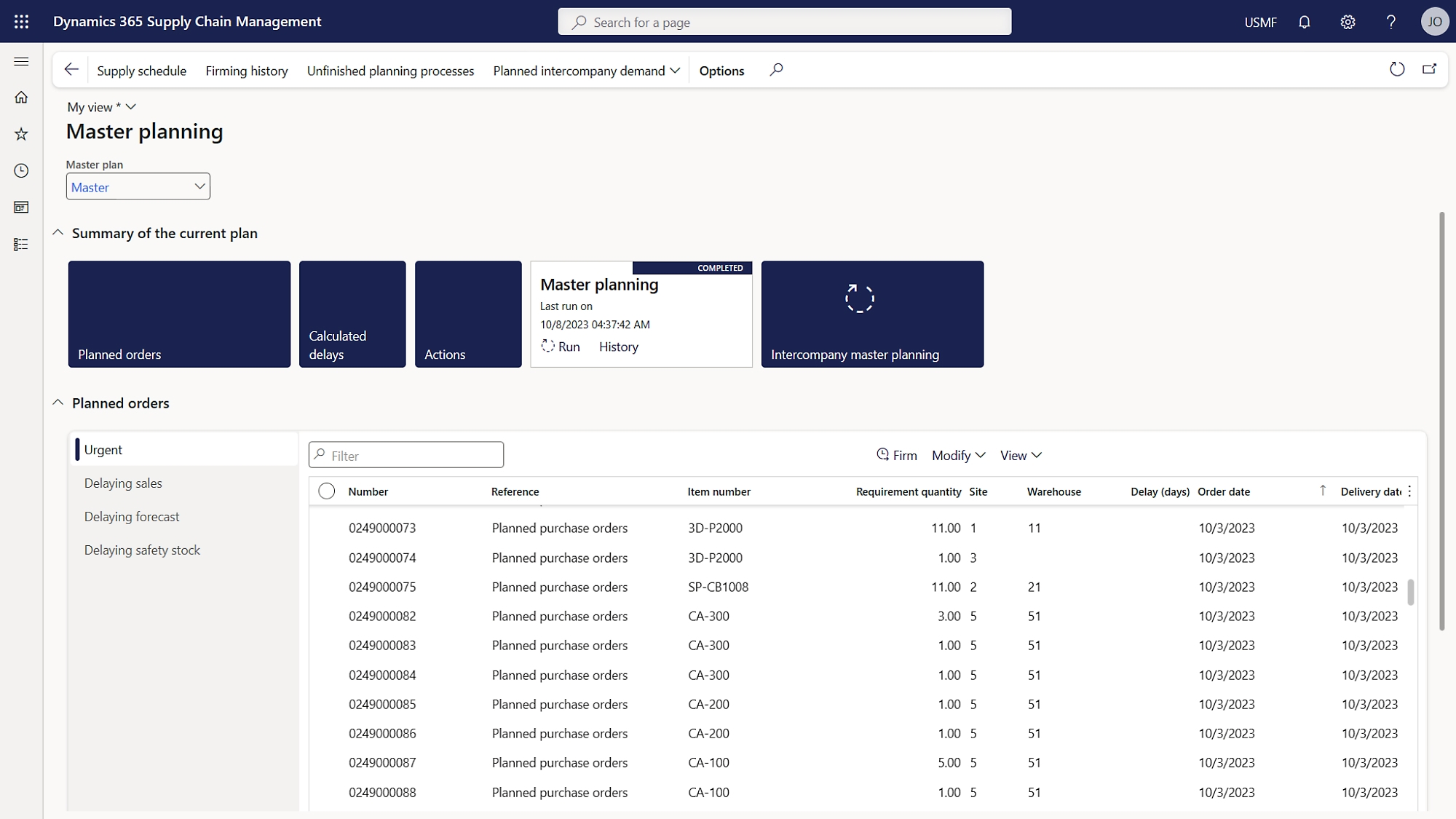 Explore the product view ↗
Microsoft product imagery. Interface and features vary by configuration.
Different businesses. Different ways of working. A shared need for technology that supports real operations.









For organizations managing complex products, sites, warehouses and production processes. Tripearltech aligns Dynamics 365 Supply Chain Management with the decisions and transactions that keep operations moving.
Structure released products, variants, units and relevant product attributes. Agree ownership and change discipline so purchasing, production and warehouse teams use consistent definitions.
Connect purchasing requirements, suppliers and purchase orders with approval and receipt processes. Define exception handling for delayed supply, quantity differences and rejected material.
Assess planning needs across demand, coverage, lead times and capacity. Validate Planning Optimization and advanced demand-planning requirements against the selected scope, data and licensing.
Track stock across relevant dimensions, sites and warehouses. Design counting, reservation and traceability rules around the operational decisions users need to make.
Configure receiving, put-away, picking, packing and dispatch for the intended warehouse processes. Test mobile work, locations and exceptions with the people performing the tasks.
Assess discrete, process or lean manufacturing requirements, including production structures and execution. Validate the exact fit for your production model rather than assuming one configuration suits every factory.
Connect quality checks and inventory traceability to agreed material flows. Test quarantine, nonconformance and release processes alongside relevant industry requirements.
Plan maintenance of operational assets and connect work to the people and materials required. Distinguish internal asset maintenance from customer-site work managed through Field Service.
Assess outbound transportation processes and review performance across the supply chain. Advanced analytics and automation need reliable records and a clear response when an exception appears.
Advanced planning, optimization, capacity and connected applications require a product and licensing assessment. We establish the production and warehouse scope, integration boundaries and current Microsoft requirements before committing to an architecture.
Microsoft product overview ↗Connect Dynamics 365 Supply Chain Management to the applications your people rely on. Define the business handoff, data ownership and permissions before adding another integration.

Connect operational transactions with inventory valuation, payables, receivables and financial control through an agreed accounting design.

Connect selected customer and demand-related information while retaining authoritative pricing, availability and fulfilment ownership.

Assess service-parts and customer-asset connections when equipment needs maintenance beyond your own operational sites.

Evaluate stocked and project-related operational scenarios within the appropriate deployment model.

Create focused supporting applications where a justified shop-floor or business requirement needs an extension.

Support agreed operational notifications and approvals with monitoring, recovery and accountable ownership.
Warehouse mobile experiences and operational integrations must be validated against devices, connectivity and transaction volumes. Power BI, Microsoft Fabric and Azure services can extend analytics and connected operations where the business case supports them; additional licensing and architecture may be required.
Explore Microsoft’s product details ↗Tripearltech provides Dynamics 365 Supply Chain Management consulting, implementation and support from Ahmedabad, India, for businesses worldwide. Each engagement starts with your operating needs and a clear division of responsibility.
Walk through purchasing, material movements, production and fulfilment. Identify planning assumptions, data gaps and specialist processes before setting an implementation scope.
Configure products, inventory, procurement, warehousing and production within the agreed design. Validate the complete transaction flow, including exceptions and financial consequences.
Prepare items, variants, units, BOMs or formulas, routes and inventory balances as relevant. Rehearse loads and have process owners verify usability and reconciliation.
Design representative pilots for sites, workstations and mobile devices. Confirm labels, connectivity, work instructions and operator readiness before introducing wider operational change.
Connect approved shop-floor, commerce, logistics and reporting systems. Define message ownership, timing, failure handling and reconciliation to avoid hidden operational gaps.
Support the first purchasing, production and stock cycles. Review recurring exceptions, maintain integrations and prioritize changes with planners, warehouse teams and finance.
The value of Dynamics 365 Supply Chain Management depends on the process it improves. Explore common industry needs and the implementation decisions that help the solution fit.
Component availability and production priorities change faster than the planning files.
Align product structures, lead times, capacity assumptions and execution records. Validate planning outputs with production teams and agree who acts when supply or schedules change.
Formulas, batch records and quality decisions are not consistently linked to stock.
Assess process-manufacturing, batch and quality capabilities against the actual production model. Validate specialist regulatory and laboratory integration requirements with the responsible experts.
Warehouse activity and purchasing decisions rely on different views of availability.
Connect replenishment, reservations and warehouse execution around agreed stock rules. Test transfers, partial receipts and returns so exceptions do not undermine the main flow.
Shelf-life, batch control and changing demand create pressure across planning and fulfilment.
Design product and inventory settings around the relevant freshness and traceability needs. Review planning inputs and operational exceptions together rather than treating forecasting as an isolated exercise.
Product changes and project requirements disrupt procurement and manufacturing plans.
Assess product configuration, engineering changes and project-related requirements early. Connect the operational design to project and financial systems where needed.
Plants and warehouses work differently, making common planning and reporting difficult.
Agree a core process model with documented local variations. Pilot representative sites, then expand with tested data, work instructions and clear ownership of inter-site transactions.
Explore the Microsoft credential references relevant to this solution and its supporting implementation disciplines.
A supply chain implementation needs people who understand material flows as well as the platform. These Microsoft credentials reference functional consulting and the development discipline used to extend finance and operations applications.
Discuss your project team ↗ Exam MB-330
Supply Chain Management consulting
View official credential ↗Exam MB-500Related finance & operations development
View official credential ↗Official Microsoft credential references, checked September 2026. These badges identify certification disciplines, not individual employee records. Related and retired credentials are labeled. Ask us about the verified credentials and practical experience of the specialists proposed for your engagement.
A successful rollout starts with dependable product data and realistic operational assumptions. Use this guide to prepare planning, warehouses, production and the people who run them.
Bring the right people and questions to your first implementation workshop.
Our Dynamics 365 Supply Chain Management delivery approach makes design decisions, acceptance and readiness visible. The people who own the process stay involved from discovery through support.
Observe material and information flows across purchasing, production and fulfilment.
Gate: operational scope and pilot sites agreedDefine product data, planning rules, stock processes, integrations and site variations.
Gate: process and data model acceptedConfigure and test complete flows, including shortages, quality holds, returns and reconciliation.
Gate: operational scenarios and data verifiedRehearse inventory transition, train operators and introduce sites in an agreed sequence.
Gate: site, device and user readiness approvedSupport live cycles, monitor exceptions and refine planning and execution using actual results.
Gate: operational ownership and improvement priorities acceptedUnderstand the solution, its boundaries and how Tripearltech can support your implementation.
Let’s talk about your business ↗It supports operational areas such as product information, procurement, inventory, warehousing and manufacturing. Planning, quality, maintenance and transportation needs can also be assessed. The implementation scope should follow the actual supply chain rather than a generic module list.
Business Central provides broad business management for small and midsize organizations. Supply Chain Management addresses more complex enterprise operational scenarios and is commonly paired with Dynamics 365 Finance. We assess process depth, sites, volume and implementation requirements to determine fit.
These are supported manufacturing areas, alongside lean scenarios, but the detailed fit must be validated. Product structures, formulas, routes, costing, quality and specialist requirements vary considerably. We test representative production scenarios before accepting a design.
Warehouse management includes mobile processes for relevant work. We assess device compatibility, connectivity, labels, roles and task design. Operators should test real receiving, picking, counting and exception scenarios as part of the rollout.
No. Planning relies on product data, demand, lead times, calendars and disciplined execution. We validate those inputs and agree how planners respond to exceptions. Advanced planning capabilities may also require additional licensing and configuration.
Finance is a separate application with its own licensing considerations. The two can support a connected operational and financial design. We assess the required user roles and application scope rather than assuming the full suite is included.
Integration can be scoped using appropriate supported interfaces. We review transaction volumes, timing, identifiers, ownership and error recovery. The design must also explain how operational and financial records reconcile when messages arrive late or fail.
We agree item and production master data, open transactions, physical stock and relevant history. Trial loads and reconciliations are reviewed by operations and finance. The cutover plan includes stock movement controls and responsibility for final differences.
A phased approach can work if shared data, inter-site transactions and financial dependencies are addressed. We choose a representative pilot, define acceptance criteria and use the results to prepare subsequent locations.
Tripearltech provides assessment, implementation, migration, warehouse and production rollout, integration, training and support from Ahmedabad, India. Engagements for global businesses are shaped around their sites, operating processes and support requirements.