

Project sales & estimation
Connect opportunity and quotation discussions with estimates of the work required. Capture assumptions about time, roles and commercial terms before they become delivery commitments.
 MICROSOFT DYNAMICS 365
Connect the commercial promise to the work, people and costs behind it. Microsoft Dynamics 365 Project Operations helps project-based organizations bring sales, resource planning, delivery and project financials into a more consistent process.
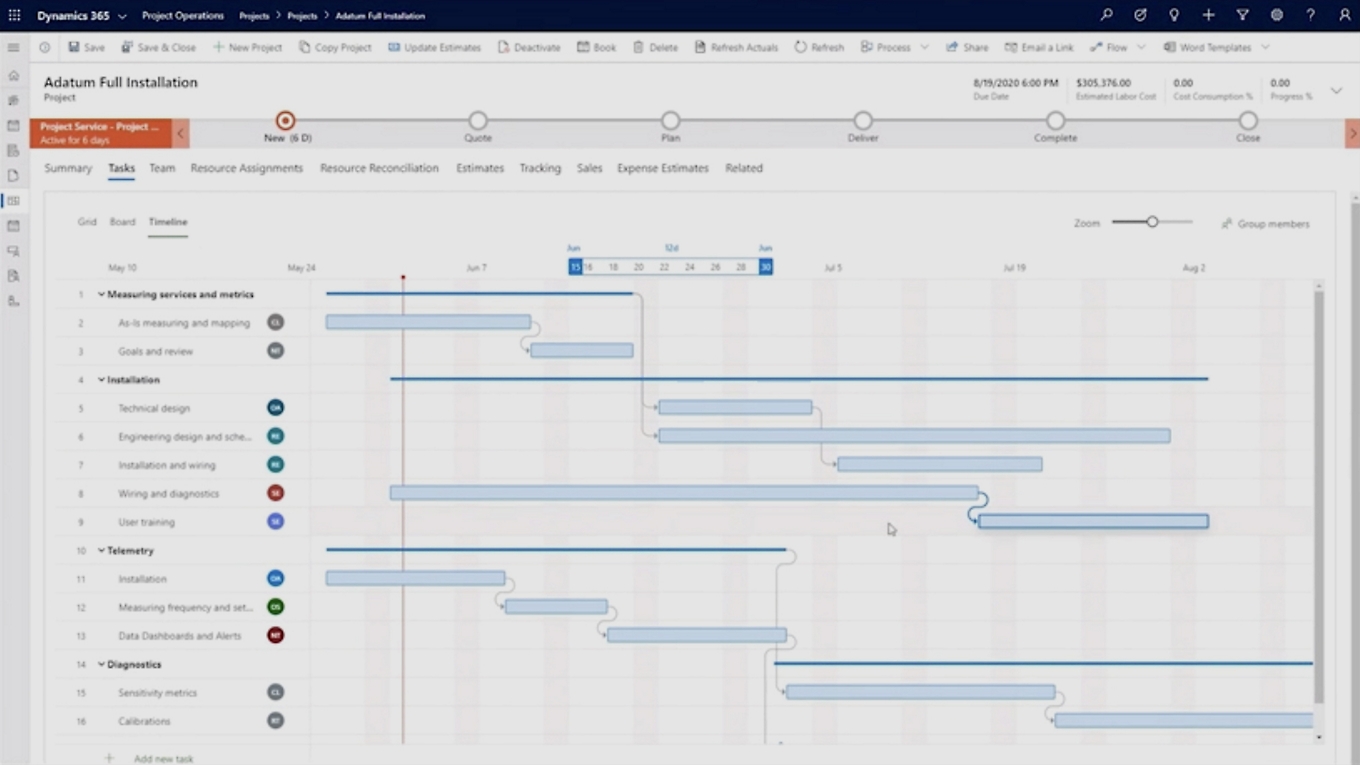 Explore the product view ↗
Microsoft product imagery. Interface and features vary by configuration.
Different businesses. Different ways of working. A shared need for technology that supports real operations.









For service-led organizations that need to connect project commitments with delivery and profitability. Tripearltech helps determine the right deployment model and the processes that should be connected first.
Connect opportunity and quotation discussions with estimates of the work required. Capture assumptions about time, roles and commercial terms before they become delivery commitments.
Structure work into a manageable plan with dependencies and estimates. Agree the level of detail that supports delivery without creating an administrative task for every small activity.
Define the roles, skills and timing a project needs. Give resource managers a clearer basis for matching demand to availability and identifying gaps early.
Coordinate bookings and assignments with delivery plans. Review how utilization and availability are calculated so a busy calendar is not mistaken for a sustainable workload.
Record work and expenses against the appropriate project with an approval process. Help project and finance teams understand which records are submitted, approved and ready for downstream processing.
Manage the agreed commercial model for project work. Validate time-and-materials, fixed-price and milestone scenarios against the selected deployment and financial design.
Bring actual activity into the discussion about project performance. Finance integration and deployment choices determine the accounting processes available and must be assessed early.
Review estimates, actuals and delivery changes using agreed measures. Give project managers a basis for discussing margin pressure before the work is finished.
Define approvals, access and change responsibilities across commercial and delivery teams. Use supported extensions or integrations where the standard process does not cover specialist needs.
Project Operations has deployment options with different financial and operational capabilities. We assess resource/non-stocked, stocked/manufacturing and other applicable scenarios against Microsoft guidance. Do not assume every project-accounting feature is present in every deployment.
Microsoft product overview ↗Connect Dynamics 365 Project Operations to the applications your people rely on. Define the business handoff, data ownership and permissions before adding another integration.

Align account and opportunity work with project-based selling. Define which application experience owns the commercial record and avoid duplicate sales processes.

Assess integrated project accounting, invoicing and financial control for the selected deployment model.

Evaluate project procurement, stocked items and manufacturing requirements where the project scenario calls for operational integration.

Support agreed notifications and approval-related tasks while retaining a clear record of who accepts commercial or delivery changes.

Extend specific project processes with controlled applications where a validated gap justifies them.

Support the shared data model and application connections relevant to the chosen Project Operations architecture.
Microsoft 365 supports collaboration around project work, and Power BI can broaden performance analysis. Project planning experiences, integration patterns and financial capabilities must be checked against the selected deployment rather than treated as one identical product configuration.
Explore Microsoft’s product details ↗Tripearltech provides Dynamics 365 Project Operations consulting, implementation and support from Ahmedabad, India, for businesses worldwide. Each engagement starts with your operating needs and a clear division of responsibility.
Review how work is sold, estimated, staffed, delivered and billed. Identify the gaps between commercial promises and operational reality, and establish the right deployment approach.
Configure project sales, resource processes, time capture and approvals within the agreed scope. Validate the process jointly with delivery, resource management and finance.
Assess open projects, contracts, resource records, rates and relevant balances. Decide what should migrate as active work and how historical records remain available.
Design the financial and operational connections for the selected deployment. Agree identifiers, synchronization responsibilities and reconciliation of project-related transactions.
Define measures for delivery and commercial reviews, then train users around their own responsibilities. Focus on timely data capture and meaningful review rather than additional status reporting.
Review integration issues, approval bottlenecks and changes to project processes. Maintain the solution and prioritize improvements with both project and finance stakeholders.
The value of Dynamics 365 Project Operations depends on the process it improves. Explore common industry needs and the implementation decisions that help the solution fit.
A proposal is accepted before delivery has a reliable view of effort and resources.
Connect estimates, roles and commercial assumptions to the project handover. Review resource availability before commitments become firm, and track actual effort against the agreed plan.
Changes to technical scope are not reflected quickly in project costs and billing.
Define how approved changes update estimates, schedules and commercial terms. Assess specialist engineering and document-control requirements as separate integration needs.
Consultants work across projects while time and expenses reach finance late.
Align resource bookings, time submission and approval responsibilities. Give managers visibility into unapproved work and discuss its billing effect before period end.
Procurement and complex contracts are treated as if they were simple service projects.
Assess stocked materials, manufacturing, subcontracting and contract requirements before selecting a deployment. Specialist EPC needs may require additional applications or extensions.
Delivery teams see workload while management sees revenue, but neither has the full picture.
Connect estimates, resource needs and actual activity to commercial reviews. Make changes visible and agree how retainers or other recurring arrangements should be represented.
Rate cards, currencies, legal entities and shared resources complicate project accounting.
Design the deployment and financial integration around those requirements. Test intercompany and cross-entity scenarios explicitly rather than extrapolating from a single-company pilot.
Explore the Microsoft credential references relevant to this solution and its supporting implementation disciplines.
These are supporting credentials for financial processes and platform development, not dedicated Project Operations certifications. Project-specific experience and knowledge of the selected deployment remain essential when forming the delivery team.
Discuss your project team ↗ Exam MB-310
Finance consulting
View official credential ↗Exam PL-400Related platform development
View official credential ↗Official Microsoft credential references, checked September 2026. These badges identify certification disciplines, not individual employee records. Related and retired credentials are labeled. Ask us about the verified credentials and practical experience of the specialists proposed for your engagement.
A project system needs agreement between sales, delivery, resource managers and finance. Use this guide to settle those handoffs before implementation begins.
Bring the right people and questions to your first implementation workshop.
Our Dynamics 365 Project Operations delivery approach makes design decisions, acceptance and readiness visible. The people who own the process stay involved from discovery through support.
Follow the project lifecycle from opportunity to financial review and identify deployment constraints.
Gate: operating model and deployment approach agreedAlign estimation, resource management, time approval and financial handoffs with process owners.
Gate: commercial and financial design acceptedConfigure the solution, rehearse open-project migration and test complete delivery-to-billing scenarios.
Gate: project and financial results reconciledTrain project managers, resources and finance, then phase introduction around live delivery commitments.
Gate: project teams and cutover readySupport the first billing cycles, review data quality and prioritize improvements in delivery visibility.
Gate: operating ownership and review cadence acceptedUnderstand the solution, its boundaries and how Tripearltech can support your implementation.
Let’s talk about your business ↗It connects project-based selling, planning, resource management and project financial processes. The available capabilities depend on the deployment type. Tripearltech helps service and project businesses determine how the application fits their commercial and delivery model.
No. Scheduling is one part of a wider process that can connect estimates, contracts, resources, time and project financials. If your requirement is only task tracking, the scope may not justify a full Project Operations implementation.
We assess stocked or non-stocked work, manufacturing needs, legal entities, accounting requirements and existing Dynamics applications. That assessment should happen before committing to a design because the deployment choice affects supported capabilities and integrations.
No. Financial capabilities and integration requirements vary by deployment. We establish where accounting, invoicing and financial controls will operate and assess licenses and integration accordingly. Finance should not be assumed to be included automatically.
These commercial models are relevant Project Operations scenarios, but details such as billing rules, milestones and accounting must be validated against the selected deployment. We test representative contracts and exceptions during design and acceptance.
Resource requirements, bookings and assignments can support cross-project planning. We define skills, calendars and allocation responsibilities, then agree how availability and utilization will be measured. Reliable resource records are important to a useful planning view.
Not automatically. Procurement, stocked materials, subcontracting, claims and specialist industry controls need a fit assessment. Some scenarios use integrated Dynamics applications or additional solutions. We avoid treating every project business as the same operational model.
We agree the treatment of contracts, remaining estimates, resources, time, costs and billing position. Trial migration and reconciliation are essential. Business owners decide which history is operationally necessary and what can remain accessible in an archive.
No. The displayed Finance and Power Platform credentials support parts of a Project Operations engagement. They are identified as related disciplines. Ask about the proposed specialists' relevant deployment experience and verified individual credentials.
Yes. Tripearltech provides assessment, implementation, integration, migration, training and support for Dynamics 365 Project Operations from Ahmedabad, India, serving global businesses. The project scope follows your delivery model and financial requirements.