

Case management
Track enquiries and issues with ownership, priority and a consistent history. Define case types and resolution reasons that help the team understand the work rather than simply count tickets.
 MICROSOFT DYNAMICS 365
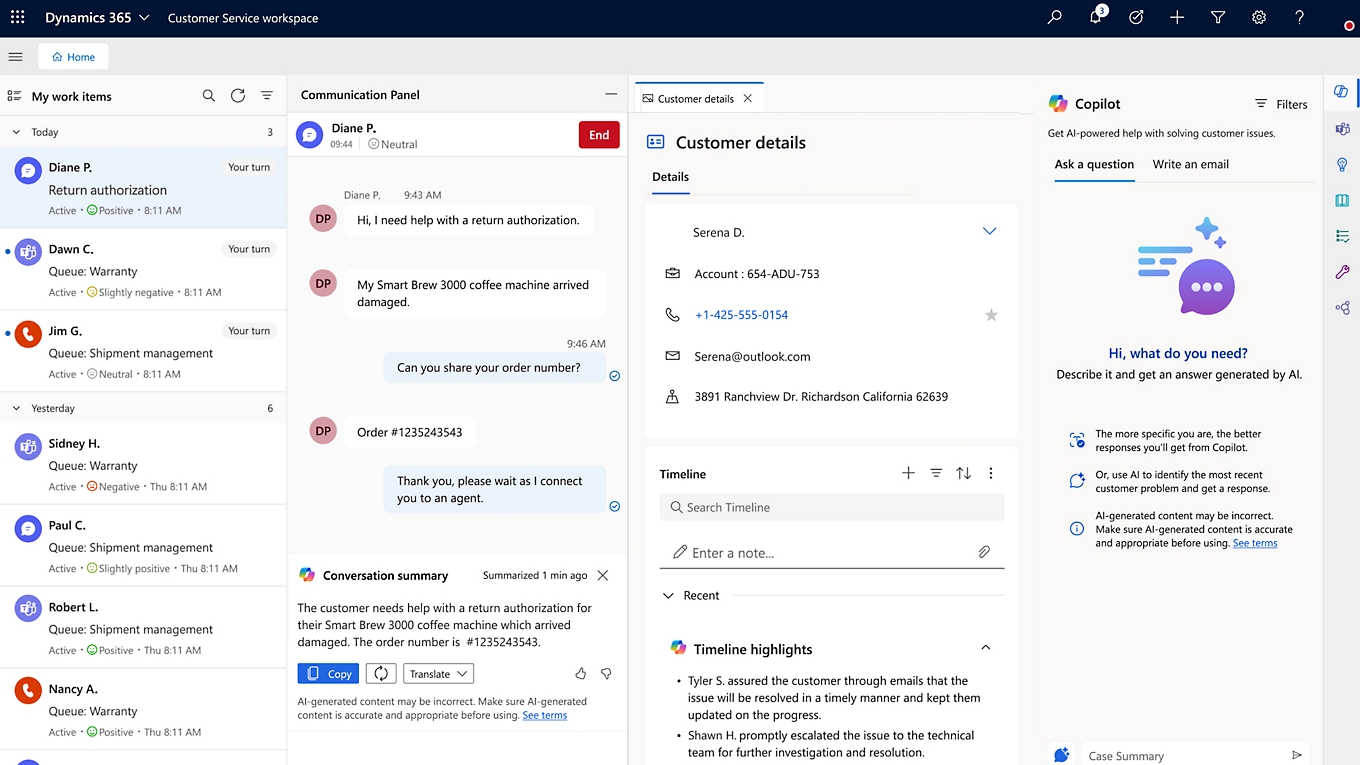
Give support teams a shared view of cases, conversations and knowledge. Microsoft Dynamics 365 Customer Service helps you organize the work behind each answer, so customers do not have to explain the same issue at every handover.
 Explore the product view ↗
Microsoft product imagery. Interface and features vary by configuration.
Different businesses. Different ways of working. A shared need for technology that supports real operations.









For organizations handling repeat enquiries, complex cases and support across teams. Tripearltech aligns case management, knowledge and service processes with the commitments you make to customers.
Track enquiries and issues with ownership, priority and a consistent history. Define case types and resolution reasons that help the team understand the work rather than simply count tickets.
Organize incoming work into queues and assess routing based on skills, availability and business rules. Validate unified routing eligibility and capacity requirements for your selected deployment.
Configure service targets, business hours and escalation conditions. Agree what starts, pauses and completes a service measure before turning a contractual commitment into a timer.
Maintain reviewed answers and practical troubleshooting content. Give subject-matter experts ownership of accuracy, publishing and expiry so the knowledge base stays useful.
Assess how support eligibility and consumption should be represented. Link agreed entitlements to the service process and make exceptions visible to authorized staff.
Bring relevant case information and activities into the service representative's working environment. Design forms and views to reduce unnecessary searching during a customer interaction.
Plan email, chat, messaging or voice around your service model. Digital and voice capabilities can require additional products or licensing; define customer context and handoff behavior across channels.
Assess available case summaries, drafting and knowledge assistance with representative questions. Review permissions, approved knowledge and answer quality before putting assistance into daily use.
Review backlog, response patterns, resolution time and repeated issues. Define each measure consistently and use findings to improve the underlying service process.
Case management, routing, digital channels, voice and AI capabilities have different licensing and configuration requirements. Customer Service and Dynamics 365 Contact Center are related but distinct offers; we assess the right combination for your service operation.
Microsoft product overview ↗Connect Dynamics 365 Customer Service to the applications your people rely on. Define the business handoff, data ownership and permissions before adding another integration.

Give account owners relevant support context and define escalation to the commercial team when a service issue affects an ongoing relationship.

Move from remote diagnosis to an on-site work order through an agreed handoff, preserving asset and customer information.

Design a customer portal for selected service requests and knowledge, with deliberate authentication and record access controls.

Connect notifications, approvals and exception handling to the case process without hiding responsibility inside an unattended flow.

Structure shared customer and service data with role-based access and clear ownership across applications.

Assess self-service agents grounded in approved knowledge, with a reliable route to a human when the issue requires judgment.
Microsoft 365 collaboration and Power BI analysis can support service teams and managers. Voice and digital-channel design should be assessed alongside Dynamics 365 Contact Center and telephony requirements. Connected services are not automatically included with every Customer Service license.
Explore Microsoft’s product details ↗Tripearltech provides Dynamics 365 Customer Service consulting, implementation and support from Ahmedabad, India, for businesses worldwide. Each engagement starts with your operating needs and a clear division of responsibility.
Review incoming channels, case categories, service promises and escalation paths. Identify where work is delayed or ownership becomes unclear before designing a new service process.
Configure cases, queues, SLAs, entitlements and security around agreed policies. Test business hours, reassignment and exceptions with supervisors and service representatives.
Assess customer records, open cases, relevant history and knowledge articles. Clean categories and validate links so agents can use the migrated information rather than inherit old confusion.
Design the intake and handoff between email, portals, digital channels and other systems. Confirm licensing, identity, customer context and error handling for each connection.
Set up knowledge ownership, review cycles and role-based training. Test common and difficult enquiries so people know how to resolve, escalate or seek help.
Review recurring cases, queue behavior and integration failures. Maintain the application and help service leaders prioritize changes based on customer and operational impact.
The value of Dynamics 365 Customer Service depends on the process it improves. Explore common industry needs and the implementation decisions that help the solution fit.
Product enquiries, warranty questions and technical issues move through disconnected teams.
Organize cases around the customer and relevant product context. Define warranty checks and engineering escalation, with Field Service integration where an on-site visit is required.
Order complaints and delivery enquiries are repeatedly passed between sales and operations.
Give support staff access to agreed ERP information and clear resolution ownership. Keep fulfilment updates in the operational system while making the customer conversation easier to follow.
Technical diagnosis depends on a few experienced people and answers are not retained.
Build reviewed troubleshooting knowledge and structured escalation to specialists. Capture useful resolutions so recurring issues do not start from an empty case.
Different clients have different support commitments, but the queue treats every case alike.
Define priorities, eligibility and SLA behavior around agreed service terms. Make exceptional commitments visible and test how escalation works outside normal office hours.
Customers contact multiple channels and repeat their issue at each handover.
Plan customer identification and channel continuity before adding more channels. Use routing and case history to support a consistent conversation; assess contact-center requirements separately.
Time zones, language needs and handovers make ownership difficult to track.
Align queues, business calendars, permissions and knowledge responsibility by service region. Test cross-region reassignment and escalation so a handover does not become a forgotten case.
Explore the Microsoft credential references relevant to this solution and its supporting implementation disciplines.
Customer Service implementation needs both operational understanding and platform discipline. These references cover service configuration and the development skills used for connected applications.
Discuss your project team ↗ Exam MB-230
Customer Service consulting
View official credential ↗Exam PL-400Related platform development
View official credential ↗Official Microsoft credential references, checked September 2026. These badges identify certification disciplines, not individual employee records. Related and retired credentials are labeled. Ask us about the verified credentials and practical experience of the specialists proposed for your engagement.
Before adding another support channel, agree how an issue should move from arrival to resolution. This guide helps service leaders prepare queues, knowledge, data and people for change.
Bring the right people and questions to your first implementation workshop.
Our Dynamics 365 Customer Service delivery approach makes design decisions, acceptance and readiness visible. The people who own the process stay involved from discovery through support.
Review contact reasons, channels, service targets and the work behind resolution.
Gate: service model and priorities agreedDefine queues, routing, SLAs, knowledge ownership and access to customer information.
Gate: service blueprint acceptedBuild the agreed process and test case intake, escalation, handoffs and closure with realistic scenarios.
Gate: routing and service measures verifiedTrain agents and supervisors, publish reviewed knowledge and rehearse channel transition.
Gate: service team and cutover readyReview backlog, recurring issues and knowledge gaps, then agree a focused improvement plan.
Gate: support ownership and review cadence acceptedUnderstand the solution, its boundaries and how Tripearltech can support your implementation.
Let’s talk about your business ↗It helps organizations manage customer cases, knowledge and service processes. Depending on the selected offer and configuration, it can support routing, service targets and connected channels. The aim is a more consistent way to receive, assign and resolve customer issues.
No. They are related products with different roles and licensing. Customer Service focuses on service management and case handling; Contact Center addresses contact-center capabilities. We assess your channel and service requirements before recommending a combination.
Yes, SLAs can be configured around agreed measures, calendars and conditions. Your team must define start, pause, success and escalation rules. We test exceptional situations so the system reflects the actual commitment rather than an oversimplified timer.
A portal can be designed using Power Pages and appropriate integration. Identity, record permissions, request types and knowledge access need to be scoped. Portal capacity and licenses are assessed separately from the core service application.
Customer Service can be connected to Field Service through an agreed process. We define when the case should lead to a work order, which customer and asset details are transferred and who remains responsible for communicating with the customer.
Yes, after reviewing the source system and required history. We agree how attachments, customer relationships, categories and open-case ownership will be handled. Knowledge should also be reviewed for accuracy rather than copied without checking.
Start with approved knowledge and a defined use case. We assess product availability, data access and response quality, then test escalation to a human. Automated assistance should not be allowed to make unsupported commitments to customers.
We agree definitions for backlog, response, resolution and repeat issues with your service leaders. Reports should help identify where work is stuck and why. Targets and improvements must be measured against your own baseline.
It can be configured for distributed operations, but calendars, languages, access, channel availability and regional requirements need assessment. We design the support model around your actual staffing and handover responsibilities.
Tripearltech provides Dynamics 365 Customer Service consulting, implementation, migration, integration, training and ongoing support from Ahmedabad, India, for global businesses. Scope, service hours and responsibilities are agreed for each engagement.